How to Choose the Right Pet Food: A Simple Guide for Pet Parents
From puppy and kitten food to senior diets, here is how to make a more informed choice at the pet food shelf.
By Paws & Claws Pet Store · Pondicherry
The right pet food depends on the animal in front of you: their species, age, size, activity and individual needs. This pet food guide gives dog and cat parents a practical starting point, without promising that any one food is perfect for every pet.
Start with your pet's age
Puppies and kittens
Growing pets need food labelled for their species and growth stage. Puppy food and kitten food are formulated differently from adult food. If your pet is growing quickly or has a sensitive stomach, ask your veterinarian what is appropriate.
Adult pets
Adult dog food or cat food labelled as complete for adult maintenance is a sensible place to start. Consider your pet's size, activity level and how they are doing on their current food, rather than choosing by packaging alone.
Senior pets
Older pets may have changing appetites, activity levels or health needs. A “senior” label is not a substitute for a veterinary assessment, especially if your pet has lost weight or developed a new symptom.
Dog food is not cat food
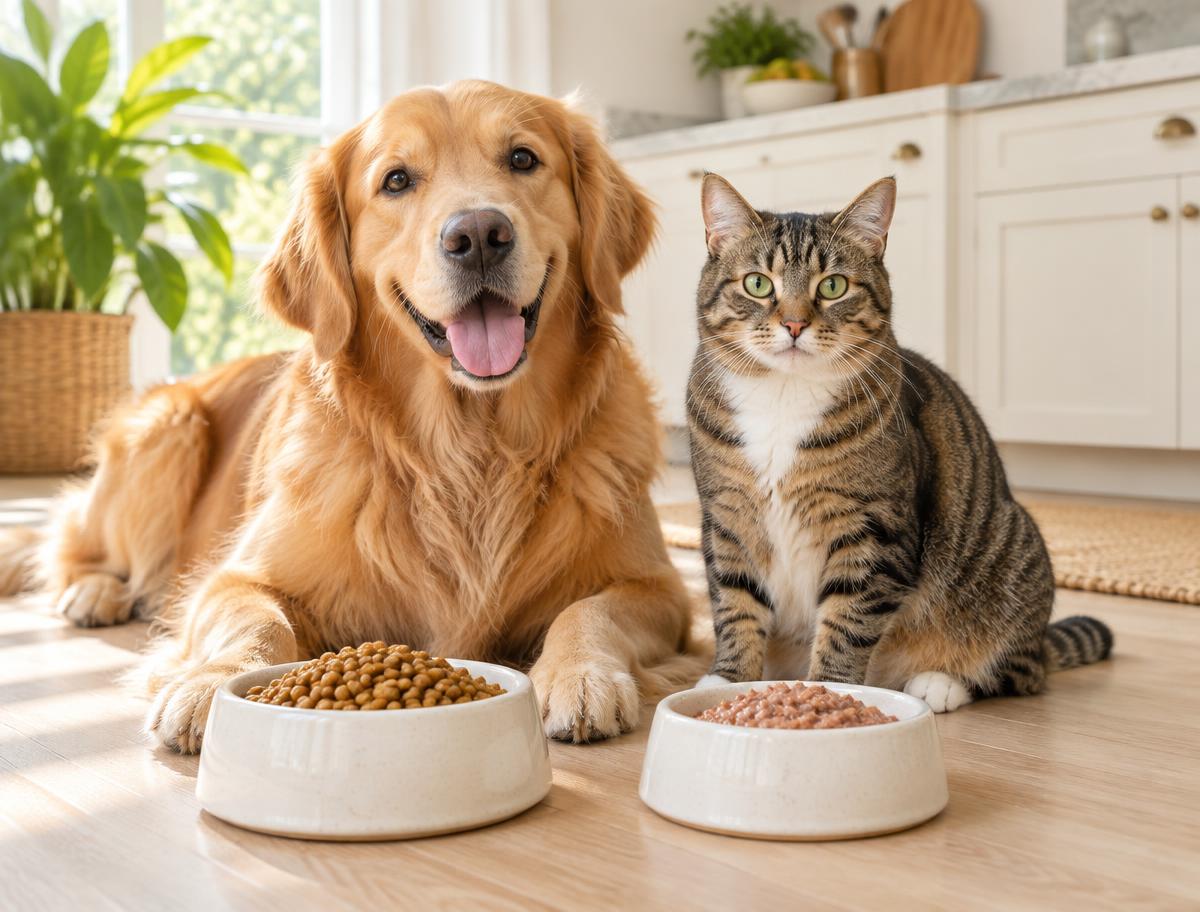
Dogs and cats have different nutritional needs. Choose food made for your pet's species; do not make the other animal's food their regular diet. In a multi-pet home, separate feeding spots can make it easier to see what each pet eats.
Dry food or wet food?
Both dry and wet food can fit into a balanced routine when they are appropriate complete foods. Dry food is convenient to store and portion; wet food offers a different texture and more moisture. Think about your pet's preferences, access to fresh water, storage instructions and your veterinarian's advice. If combining them, count both portions.
Read the label, not just the front of the pack
Check the species, life stage, ingredient list, feeding directions and whether the pack says the food is complete or complementary. Ingredient lists can help identify a particular ingredient your pet should avoid, but a catchy ingredient claim does not tell the whole nutritional story. Treats and complementary foods should not replace a suitable main diet.
Use feeding guidance as a starting point
Pack guidelines are estimates, not a fixed target for every animal. Measure portions, include treats in the daily total, and watch your pet's body condition over time. Make food changes gradually and keep fresh water available. Ask a veterinarian if you are unsure about weight or portions.
Special dietary needs
If your pet has a diagnosed condition, suspected food reaction, repeated digestive upset or a prescribed diet, consult a veterinarian before switching foods. Avoid assuming a “grain-free,” “sensitive” or other marketing label is the right answer for a medical concern.
Explore our pet food and products, or contact our Pondicherry team if you need help finding an available option.
Frequently asked questions
Can my cat eat dog food?
Dog food is not designed to be a cat's regular diet. Choose a complete cat food suited to your cat's life stage.
Should I switch my pet's food suddenly?
A gradual change is usually easier to monitor. If your pet is unwell or on a prescribed diet, ask your veterinarian before making a change.
Is expensive food always better?
Price alone is not a reliable measure of fit. Start with species, life stage and a complete-food label, then consider your pet's response and veterinary guidance.